Author Archives: Shawn Vander Lugt

Excluded!

When I was in Jr. High, one of the “cool kids” threw a huge birthday party. Everyone who was anyone was invited. When I didn’t receive an invitation, I was devastated. The weekend of the party arrived and I floundered at home in my own self-pity.  Winning the lottery couldn’t have made that weekend any better. Whether someone doesn’t invite you to a birthday party or picks you last for a kickball team, exclusion is devastating to one’s self-esteem.

Evangelists proclaim the Gospel and boast that it’s for everyone—everyone who believes. The problem arrived when “authority”—whatever that may be—began to dictate who believed and who didn’t and thereby excluded those who they assessed didn’t believe. Heresies developed, Synods responded with disciplinary action, dogma became authoritative, Scripture and the papacy were exonerated. Christianity became a religion just like all the others and it no longer was a faith for “everyone.” Because of this fact, Christianity is often –and rightly so—accused of being an exclusionary religion. Christian dogma mandates faith in Christ—his death and resurrection—as the sole requirement for inclusion. If one doesn’t believe, one is not included in the community of faith. My question is:

Who instilled the authority upon us, as Christians, to determine whether one truly believes or not?

The Apostle Paul writes:

“What, after all, is Apollos? And what is Paul? Only servants, through whom you came to believe—as the Lord has assigned to each his task. I planted the seed, Apollos watered it, but God has been making it grow. So neither the one who plants nor the one who waters is anything, but only God, who makes things grow.”

—1 Corinthians 3:5-7

I wish Paul had added one more function to the end of this passage. Who harvests? From other Scripture passages, we know that God is the one who harvests the wheat when it is ready. Unfortunately, over time, the Church has assumed the harvesting responsibility. When we begin to decide who’s in and who’s out, tragedies such as the crusades, the inquisition, the Salem witch trials, slavery, apartheid, and exclusive measures the Church embarks upon.

I’m just as guilty of judgment as the next person. Where did we, as Christians, go wrong? When did grace take second place—or even third or fourth place—over condemnation? When did we renounce our divine commission to plant the seed and water it in the fields, and instead take on the harvesting responsibilities?

When Jesus was born in Bethlehem, an angel appeared to the destitute and impoverished shepherds in the fields nearby. The Lord’s glory radiated about the shepherds, and they were afraid. The angel comforted them saying, “Don’t be afraid! I’m here to announce a great and joyful event that is meant for everybody, worldwide: A Savior has just been born in David’s town, a Savior who is Messiah and Master” (Luke 2:10-11—The Message).

These evangelists are right-on. The Gospel is for everybody, worldwide. God loved everyone so much that he sent his Son into the world to die, so that anyone who believes in Him has eternal life. Sure, after God harvests the crops, the wheat is definitely separated from the tares. Yet, whether one truly believes is for God to decide and no one else. As Christians, we are called to emulate the shepherds, go out into the world, and tell everyone what we see and hear—to testify about our own experiences with our Lord and Savior.  Like the shepherds and like the Apostle Paul, we plant the seed. We are also called as Christians to make disciples, to teach others about Christ and the wonders that lie within a genuine faith in Jesus. Like Apollos, we are to water the seed. Let’s leave the growing and the harvesting to God.

It breaks my heart to see condemnation, exclusion, and hatred spewing from the mouths of Christians—especially during Christmas. Christmas is about celebrating the birth of Jesus, a joyful event for EVERYBODY…worldwide.


Augustus Gloopitis

My daughter is currently learning about the Roman Empire in school. Thereby, her weekly spelling words surround this topic. Last week, one of her spelling words was Augustus, the emperor of Rome when Jesus was born. I quiz her daily on her spelling words. As I state the words—instead of using the word in a sentence—I attempt to use the word in a song. I had trouble with Augustus, so as an alternative to singing, I quoted Luke 2:1 in the King James Version: “And it came to pass in those days, that there went out a decree from Caesar Augustus that all the world should be taxed.” My daughter immediate realized that I didn’t contribute to her quiz by singing the word in the lyrics of a song and began to sing the first line of “Augustus Gloop!” From Charlie and the Chocolate Factory:

Augustus Gloop! Augustus Gloop!

I knew the next line…so I continued:

The great big greedy nincompoop!

She was impressed…especially with the word “nincompoop!”

Here’s the complete song from the movie:

Augustus Gloop! Augustus Gloop!
The great big greedy nincompoop!
Augustus Gloop!
So big and vile
So greedy, foul, and infantile
‘Come on!’ we cried, ‘The time is ripe
To send him shooting up the pipe!
But don’t, dear children, be alarmed;
Augustus Gloop will not be harmed,
Augustus Gloop will not be harmed
Although, of course, we must admit
He will be altered quite a bit.
Slowly, the wheels go round and round,
The cogs begin to grind and pound;
We boil him for a minute more,
Until we’re absolutely sure
Then out he comes! And now! By grace!
A miracle has taken place!
This greedy brute, this louse’s ear,
Is loved by people everywhere!
For who could hate or bear a grudge
Against a luscious bit of fudge?”

My daughter’s quick modification from the biblical reference of Caesar Augustus in the prologue to Jesus’ birth to Augustus Gloop caused me to take pause. Is there a connection here? Of course there is! And if there isn’t…I’m going to create one.

Augustus Gloop was a nasty, greedy, gluttonous pig…and his parents facilitated and enabled him. Augustus represents Christmas spirit gone awry. This year’s Black Friday commenced the Christmas season with pepper spray in the Wal-Mart electronics department, burglary in the Wal-Mart parking lot, trampling at shopping malls, and all-out madness. The enabling parents of the Augustus Gloops of the world were trying to save a few pennies. In so doing, they were perpetually contributing to the greed and gluttony of their progenies.

When Augustus Gloop falls into the chocolate river and is whisked toward the fudge room, he’s beginning the process of refinement. Augustus Gloop is transformed from an undesirable, brutish, dog into a loveable, unselfish child. Willy Wonka assures us that Augustus will be just fine.  In fact, by some miracle, Augustus Gloop will be changed…he will be “loved everywhere.”

Jesus’ humble birth—his being wrapped in swaddling clothes and placed in a manger—is  a true representation of the desired Christmas spirit…the spirit that seems to have been lost in the disarray of flat-screen televisions, Apple products, and innovative gaming systems. Jesus’ incarnation is Almighty God in the form of a helpless baby with only straw for a bed. God could’ve come as the Roman emperor, the High Priest, or a general in the Roman infantry. He didn’t. God didn’t perpetuate the concept that riches, possession, power, and success were necessary in order to transform the world. Instead, God did the exact opposite. In Jesus, we see humility, faith, compassion, a giving spirit, and sacrifice as those necessary qualities. Faith in Jesus—his death and resurrection—is transformational. The true spirit of Christmas is to believe in the purpose of this humble baby and become transformed through Him. Jesus’ Spirit will help us combat the symptoms of Augustus Gloopitis, and embrace the love, purity, and transformation of Christmas.


Unfaithfulness

Very few things in this world are more traumatic to the integrity of one’s heart than unfaithfulness. Unfaithfulness can drive one to murder another human being, murder one’s self, or spiral downward into severe depression. A broken heart is devastating.

Scripture testifies to the heartlessness of unfaithfulness with the mandate found in Leviticus 20:10: “If a man commits adultery with another man’s wife—with the wife of his neighbor—both the adulterer and the adulteress are to be put to death.” Wow, just think if we still enforced this precept today. We definitely wouldn’t have a population problem…and unemployment? Forget about it!

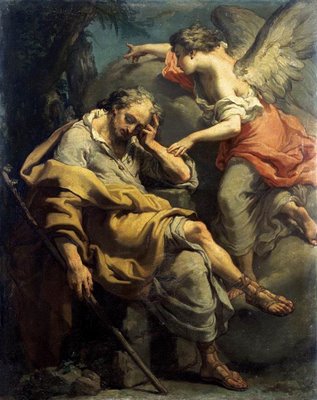
According to Jewish tradition, Joseph and Mary were as good as married. After Joseph proposed his intentions to Mary, he had to serve Mary’s father for a specified period of time…a poor-man’s dowry. During this time, Joseph and Mary had to abstain from intimate relations, but they were considered married for all intents and purposes. Joseph was waiting patiently—or quite possibly, impatiently—for his wedding night with Mary, and then BAM…one day she shows up preggers. Talk about a smack in the face. Joseph knew about the Levitical mandate when he discovered that his fiancé was pregnant. Joseph knew he could legitimately have her executed. Unfortunately, he didn’t know who the culprit was, and Mary wasn’t fessing up. In fact, Mary had concocted some far-fetched “conceived by the Holy Spirit” mumbo jumbo. In a valiant display of grace and mercy, Joseph decided to divorce Mary quietly in order to avoid the public stoning of the woman he loved. Joseph’s heart was breaking. The love of his life had been unfaithful.

We know today that Mary didn’t develop a fanciful story regarding the conception of Jesus; we know that Jesus was conceived by the Holy Spirit. Nevertheless…for the fun of it, let’s put ourselves in Joseph’s sandals for a second. Perhaps a visit from an angel in my dreams confirming my fiancé’s alibi would convince me to stay with her, but it wouldn’t completely heal my heart; it wouldn’t eradicate all doubt. Even though Joseph married Mary, he was probably still nursing the aftermath of his broken heart.

After Jesus was born in Bethlehem, and the Magi from the East presented their gifts to Jesus, Joseph’s favorite angel paid him another visit in yet another dream. I can hear Joseph saying, “Oh great…it’s you again!” The angel said to Joseph, “Get up! Take the child and His mother, flee to Egypt, and stay there until I tell you. For Herod is about to search for the child to destroy Him.” Matthew tells us that Joseph got up, took Jesus and His mother during the night, and escaped to Egypt. Joseph stayed in Egypt until Herod’s death, so that what was spoken by the Lord through the prophet might be fulfilled: “Out of Egypt I called my son” (Matthew 2:13-15).

Many skeptics argue that this particular prophecy from Hosea wasn’t speaking of Jesus (God’s Son), but of Israel. Upon reading the verse, Hosea 11:1, one would have to agree with the skeptics. Hosea 11:1-2 reads: “When Israel was a child, I loved him, and out of Egypt I called my son. But the more they were called, the more they went away from me. They sacrificed to the Baals and they burned incense to images.”

There’s really nothing to be skeptical about it. Matthew wasn’t an idiot…he knew exactly what he was doing by referencing this verse. Joseph’s trip to Egypt—with Mary and Jesus in tow—and then back again wasn’t the fulfillment of some literal interpretation of Hosea 11:1. Instead, it was the fulfillment of the essence of Hosea’s prophecy…in its entirety. The book of Hosea gives us a visual image into how God feels when his people are unfaithful. God commands the prophet Hosea to marry a prostitute who, even after she marries Hosea, continues to cheat on him with other men in public. God tells Hosea to do this so that Hosea could feel the way God feels every time His people put their trust in other gods. Hosea 11 is a window into the very heart of God. God wants nothing more than to deliver His people from the slavery of sin and desolation. Even when the love of His life is unfaithful, God remains faithful to His commitment—God’s love never ceases. God never gives up wanting to save His people, even when they find comfort in the arms of another. At the conclusion of this passage, God expresses His love for His people in this sonnet:

 “How can I give you up, Ephraim? How can I hand you over, Israel? How can I treat you like Admah? How can I make you like Zeboyim? My heart is changed within me; all my compassion is aroused. I will not carry out my fierce anger, nor will I devastate Ephraim again. For I am God, and not a man—the Holy One among you. I will not come against their cities. They will follow the LORD; he will roar like a lion. When he roars, his children will come trembling from the west. They will come from Egypt, trembling like sparrows, from Assyria, fluttering like doves. I will settle them in their homes.”

—Hosea 11:8-11

God sent the heart-broken Joseph back to Egypt to illustrate the true purpose of Jesus. It wasn’t so Jesus could fulfill Hosea’s prophecy by traveling from Egypt back to Israel. It was so Jesus could fulfill Hosea’s prophecy by redeeming a people who perpetually broke God’s heart through unfaithfulness. Jesus is the final solution through which God will deliver His wandering people from the slavery of sin and death that is so often equated to the bondage they experienced in Egypt.

Jesus, the Lion of Judah, roars upon his victory over the grave. Jesus’ victory delivers us from our Egypts…from our Assyrias…from all those places in our lives that hold us captive. Even though our unfaithfulness breaks God’s heart, through Jesus, God calls us (his sons and daughters) out of Egypt…out of sin and death and He redeems us. Now we can flutter like doves, and settle in our homes…in our homes with the Lord.


My Best Friend’s Girl

The sun was peeking over Long’s Peak and spraying its resplendent rays along the western slope of the Devil’s Backbone. I had spent the sweltering summer day hiking with my children through Lory State Park. Upon the completion of our hike, we pensively watched teenagers jump from the red cliffs into the refreshing water of Horsetooth Reservoir while we waded along the shoreline. Even though all three of us wanted to join the teenagers and plunge into the cool waters, we abdicated the idea, jumped into my Chevy Metro, turned on the air conditioner, and drove home. It had been a great day.

As we rounded the curve, just past Masonville, “My Best Friend’s Girl” by the Cars started to resound over the airways of my Metro’s state-of-the-art stereo system. I turned it up and began to “jam out.” My children watched with mortified looks. I, however, knew that—deep down—they were impressed with my Napoleon Dynamite skills. Upon the song’s conclusion, I turned down the volume and my daughter simultaneously asked, “So…is that song about a guy who used to date his best friend’s girlfriend?”

“It sure is!” I answered.

“Did you ever date your best friend’s girlfriend, Dad?”

Taking over, my son answered her saying, “It’s just a song. Dad’s only had a couple girlfriends. Shoot. He doesn’t even have a BEST FRIEND!”

BAM! DOUBLE BURN!      …and from my own son!

My son’s burn was true…and I have only myself to blame. I named him after the Old Testament prophet, Micah. The role of the prophet—then and now–is two-fold.  The prophet’s inspired by God’s Spirit to analyze his culture’s contemporary situation and “state the obvious.” In addition to cultural analysis, the prophet also provided his society with a futuristic perspective of either judgment, hope, or a combination of the two.  My son—named after a prophet—analyzed his father’s current state of affairs. It can be debated as to whether his analysis was of divine origin, or whether it was just THAT obvious. Unfortunately, my son didn’t provide me with gifts of clairvoyance. He didn’t impart any resemblance of hope for a future girlfriend…or SHOOT….even a future best friend. My son is halfway to becoming a true prophet and fulfilling the prophecy of his given name.

It’s December 1st.  For the next 24 days, as we sojourn through the Advent season, we’ll reflect upon the prophets of old and their divinely inspired assessment of their contemporary cultures, as well as their futuristic insights of Messianic hope, peace, joy, love, and reconciliation, which was—and continues to be—fulfilled in our Immanuel, the Prince of Peace.

“Nevertheless, there will be no more gloom for those who were in distress. In the past he humbled the land of Zebulun and the land of Naphtali, but in the future he will honor Galilee of the nations, by the Way of the Sea, beyond the Jordan— The people walking in darkness have seen a great light; on those living in the land of deep darkness a light has dawned. For to us a child is born, to us a son is given, and the government will be on his shoulders. And he will be called Wonderful Counselor, Mighty God, Everlasting Father, Prince of Peace. Of the greatness of his government and peace there will be no end. He will reign on David’s throne and over his kingdom, establishing and upholding it with justice and righteousness from that time on and forever. The zeal of the LORD Almighty will accomplish this.”

—Isaiah 9:1-2, 6-7


The Calming Power of Prayer

Today’s post is a tribute to all the veterans out there who fought for the freedom that I enjoy every day. I specifically want to thank those veterans who are near and dear to my heart. To my father Les Vander Lugt, my uncle Marv Kempema, my cousin Russ Vander Lugt, and my good friend Eric Silbaugh…THANK YOU!

“Out of the worst comes the best. Our most cherished values are forged in the fines of trouble times. Like the seriously ill man who comes to appreciate everyday things, the prisoner who comes to prize freedom, and the soldier under fire who comes to know the calming power of prayer, I was about to make a terrible experience worthwhile.”

—H.W. Weldon, Jr. in Coming Home

After Jesus was baptized in the Jordan River by John the Baptist, He “was led by the Spirit into the wilderness to be tempted by the devil” (Matthew 4:1). It’s interesting that in this situation, the Spirit of God is leading Jesus into the wilderness and is obviously allowing the devil to tempt Jesus. The Spirit isn’t tempting Jesus, but it should be noted that the Spirit is definitely leading Jesus into a situation where temptation and testing is going to occur.

When we pray the Lord’s Prayer, we ask God to protect us from the evil one…to not lead us into situations where we’re tested and tempted. When we stand on the fringe of a wilderness experience…when we acknowledge that upon entering that wilderness, all that we are as men and women of God will be tested to the nth degree, it is only natural for us to ask God to lead us elsewhere. This petition in the Lord ’s Prayer, is asking God to protect us…to lead us anywhere else. Of course, we’re going to pray for God’s protection, however, sometimes God says “No” to this petition. In a somewhat paradoxical way, God’s “No” to this request—His leading us into situations where temptation occurs—is complimentary.

Before God tested Jesus and refined him with the fires of temptation, God pronounced his utmost approval with his only Son:

“This is my Son, whom I love; with him I am well pleased.”

—Matthew 3:17

God loves us as His beloved children, and knows that occasional testing and refinement make us stronger and causes us to rely upon Him more fully. Jesus quoted passages from Deuteronomy three times to stave off the tempting advances from Satan while He sojourned through the wilderness. One of these passages in context is fascinating:

“Remember how the LORD your God led you all the way in the wilderness these forty years, to humble and test you in order to know what was in your heart, whether or not you would keep his commands. He humbled you, causing you to hunger and then feeding you with manna, which neither you nor your ancestors had known, to teach you that man does not live on bread alone but on every word that comes from the mouth of the LORD. Your clothes did not wear out and your feet did not swell during these forty years. Know then in your heart that as a man disciplines his son, so the LORD your God disciplines you.”

—Deuteronomy 8:2-5

Jesus obviously recognized the value in being tempted by the devil. Jesus knew that discipline, humility, and reliability on God are essential to Spiritual maturity. James writes, “Consider it pure joy, my brothers and sisters,whenever you face trials of many kinds, because you know that the testing of your faith produces perseverance. Let perseverance finish its work so that you may be mature and complete, not lacking anything” (James 1:2-4).

I’m not a veteran…and I can in NO WAY understand the trials, suffering, and fear these men and women experienced while they fought night and day for my freedom. I do know, however, that the trials they endure have the potential to send the strongest soldier to his or her knees. By asking God to not lead us into temptation, we are asking God to stand beside us and protect us through the trials we will inevitably face. If anything—through testing and temptation—we discover the calming power of prayer, a complete reliance on God as our Father, and His capacity to provide for our every need.  If God will not keep us from these temptations, at least He will empower us to endure them and will be on the other end of the desert to welcome us home as His mature, able, and beloved children.


Forsaken

Last night on Saturday Night Live’s “Weekend Update,” Seth Meyers reported, “The House on Tuesday passed a resolution that reaffirms ‘In God We Trust’ as the official motto of the United States, though it just barely edged out, ‘God, Why Have You Forsaken Us?’”

Many Americans, myself included, frequently ask God this question. Obviously, the fact that I can now only afford a large pizza with a side of wings from Pizza Hut once a week instead of twice a week is solid evidence that God has turned His back on me and the rest of His American children. Since Americans are able to find the time and resources to occupy Wall Street and several other “streets” across the country, I’m convinced that God has most definitely forsaken us…and we truly are in dire straits.

Last night, I watched the Iowa Hawkeyes beat the Michigan Wolverines with some good friends. My buddy DVR’d the game, so we could watch it later than when it originally aired. I spent the day avoiding Facebook, network television, and espn.com in order to prevent seeing the scores and thereby ruining my evening. During a break in the game, my friend—not considering the peril into which he was venturing—changed the channel to watch some highlights on a live broadcast. Suddenly, the outcome of the game we were currently watching on DVR flashed across the screen. We both realized how detrimental seeing that score would be to the enjoyment of the evening, so we both simultaneously closed our eyes and yelled. His wife, amused by the absurdity of our antics, laughed and rolled her eyes. Thankfully, we avoided a First-World disaster—discovering the outcome of a college football game before we could see it occurring in live-action. Can you imagine the suffering…the outrage? It was a pure example of Americans being forsaken by God!

My son constantly blurts out, “It’s not fair!” In response, I usually say, “Really? You know what’s not fair? Kids in Africa who lost their parents to disease. Kids in India who live on dirt floors and have no idea when they’ll have their next meal. That’s not fair!” It usually results in my son not complaining for a few hours…which is nice and refreshing. However, upon reflection, I definitely need to take my own response to his complaints to heart. I’m often saying the exact same thing to God. “It’s not fair! If you love me, why do you let me suffer?”

This question that I ask causes a more general question to surface. Charles Templeton writes, “How can a loving God bear all the suffering in this world?” Peter Kreeft, a philosophy professor at Boston College, answers Templeton’s question with two words, “He did!”

God, seeing the suffering of humanity, came down and jumped headfirst into it.  Jesus Christ on the cross is God meeting us where we are. Jesus Christ, His personal anguish, desperate alienation, and eventual death on the cross is a pure demonstration of God’s love and concern for his suffering children.  The story doesn’t end with the suffering. Often, we believe that it’s the end of the world while we struggle to endure suffering—or when we catch the outcome of a game were watching on the DVR.  When Jesus died on the cross, His disciples believed it was the end of the world as they knew it.  God seemed absent. God seemed powerless.  God seemed dead.  This is how we feel when we ourselves suffer.  “Where are you God?”  Even though it often isn’t comparable to the sufferings of those in the Third-World, our sufferings are still valid. It still isn’t fair.

Psalm 22 expresses this eloquently. So eloquently, Jesus yelled it from the top of his cross in a weakened condition.  “My God, My God, why hast thou forsaken me?”  But as we know, Psalm 22 doesn’t stop with the suffering either.  Where is the hope?  Where is God?  When we suffer there is no way we can find the good in it, but there is good in it.  We may find it someday, or we may never discover it.

 “In all things God works for the good of those who love him, who have been called according to his purpose.”

—Romans 8:28

If we we’re to encounter the Disciples on the Saturday after Jesus’ death, I’m sure they would be asking, “What good could possibly come of this? Philip Yancy states that many of us live our lives on Saturday, the day in between the horror, death, and pain of Good Friday, and the victory over that pain on Easter.  We live in Saturday asking: “Can we trust that Jesus can make something holy and beautiful and good out of a world that includes refugee camps, dishonest politicians, and inner-city ghettos. We seem to be constantly asking, “Will Sunday ever come?”

But it does! With Easter God showed that the very worst thing that has ever happened in the history of the world ended up resulting in the very best thing that has ever happened. God’s death on the cross made it possible for God’s defeat of the grave and the redemption of humanity.

Eventually, we might find some good out of suffering, or some reasons that make sense of it. However, we can’t just throw that out to someone who’s suffering.  It doesn’t work.  When were in the midst of suffering, there seems to be no explanation. Even though as C.S. Lewis states, “we hear God the loudest and grow closest to God during suffering,” we sure don’t feel close to God while its going on. It isn’t until afterward when we recognize His presence and His purpose.

Peter Kreeft tells a great story to illustrate this idea:

 “Imagine a bear in a trap and a hunter who, out of sympathy, wants to liberate him.  He tries to win the bear’s confidence, but he can’t do it, so he had to shoot the bear full of drugs.  The bear, however, thinks this is an attack and that the hunter is trying to kill him. He doesn’t realize that this is being done out of compassion. 

 Then in order to get the bear out of the trap, the hunter has to push him further into the trap to release the tension on the spring.  If the bear were semiconscious at that point, he would be even more convinced that the hunter was his enemy who was out to cause him suffering and pain.  But the bear would be wrong. He reaches this incorrect conclusion because he’s not a human being.”

There are some things we just cannot understand when it comes to the work and plan of God simply because we are not God. The problem of suffering is best expressed in the book of Job. Job is a righteous, God-fearing man, who has lost everything. His donkeys and oxen were stolen, servants stabbed and burned, his sheep were burned to a crisp, his camels were carried off, his sons and daughters were destroyed by a tornado, he was afflicted with painful sores all over his body, and sunk to the depths of despair. After trying to figure out why this was happening to him, after hearing idiotic advice from his friends, Job request an audience with God. He asks God, “Why are you allowing me, your servant Job, to suffer?” God simply responds with, “Who are you to question me? I’m God, and you’re not.”

Like the bear, we can’t understand God because we’re not God.

We will never totally understand the workings of God. Are we forsaken? Not at all. However, in the midst of suffering, we definitely feel forsaken. Our motto says, “In God We Trust.” We trust in a God who witnessed our suffering and entered into it. Jesus knows our brokenness…He was broken. Jesus knows our suffering…He died the death of a criminal. Jesus knows our hell…He descended into it. Jesus does offer us victory and hope…He conquered death and suffering that one glorious Sunday morning. We will never be forsaken again…for Jesus lives in us and through us. As it is confirmed daily—and will continue to be confirmed whenever we spend our money…it is in Him we offer our trust.


Staying Alert!

One of the enemy’s most volatile weapons, for me personally, is resentment. Resentment, bitterness, and the inability to forgive was plaguing my soul and directly correlated with the reason why I succumbed to this study on the armor of God. Resentment had pushed me behind a closed-door, had brought tears to my eyes, and had filled me with fear. My only recourse to these feelings of bitter resentment was to stand up, be strong in the Lord, and put on the full armor of God. That night—the night I cowered in fear—was exactly one month from today…October 2nd. Over the course of this past month, I’ve found my way out. I’ve fought the enemy and I have staved off his advances—for the time being. He’ll be back, with greater numbers, and with more powerful weapons. Therefore, I need to be alert, focused, and prepared for his next move.

Just prior to His betrayal, Jesus endured brutal attacks from the enemy. Jesus knew how to fight back and how to resist the devil’s temptation. By staying alert and being in constant prayer, Jesus geared up for battle. Knowing the importance of having a brotherhood surrounding Him through this battle, Jesus asked His closest comrades to come with Him, to stay alert, and to pray. Jesus walked a few paces away from His friends, and prayed. Upon returning, Jesus found them sleeping. Waking up His closest friend, Jesus said to Peter, “Can’t you stick it out with me a single hour? Stay alert; be in prayer so you don’t wander into temptation without even knowing you’re in danger” (Matthew 26:40 — The Message).

Some Christians believe that the war was won when Christ died on the cross and conquered death in His resurrection. They conclude that a life filled with pain, suffering, and battles is self-inflicted. Lack of faith, wandering off the “narrow” path, or not being a “good” Christian, results in a cursed life—lacking blessings from God. These Christians conclude that if God is blessing them, then they’re obviously doing something right. If they’re lacking in blessings, than they’re doing something wrong. They apparently never read the book of Job.

I couldn’t disagree with this perspective any more than I currently do. If these Christians are correct, than there really isn’t a need for the armor of God. If the war is over, there’s no more spiritual warfare. One of my seminary professors put it this way, “Christ’s death and resurrection is similar to D-Day. When the Allies landed on the beach in Normandy, the end of the war in Europe was certain and an Allied victory was inevitable. However, the war wasn’t over. Many soldiers died between D-Day and V-Day, battles ensued, and the enemy had several victories. Nevertheless, the ultimate victory would definitely occur…and it did.” Jesus death and resurrection sealed the deal…we will win the war…that’s an affirmative fact. However, there will be many battles and several casualties between D-Day (Christ’s death and resurrection) and V-Day (The final battle).

I almost believe the complete opposite as those Christians who conclude that a stress-free, blessed life is a sign that they’re doing everything “right.” I believe that if you’re not under attack, then you’re not a threat…and I want to be a threat. Therefore, I’ll embrace this battle, and the battles to come. However, I prefer to be ready for the next onslaught, than to be caught with my pants down. Wearing the armor of God is about standing up, being prepared, humbling myself and accepting the righteous of God through faith, being content, standing together with the community of faith, remembering my salvation in Christ, protecting my mind from doubt and fear, and sharing the Gospel with everyone I encounter. As I stand in full armor, Paul encourages me with an echo from Jesus Himself. When the enemy looms on the horizon, when temptation is hiding right around the corner, I need to “stay alert; be in prayer so I don’t wander into temptation.”

“And pray in the Spirit on all occasions with all kinds of prayers and requests. With this in mind, be alert and always keep on praying for all the Lord’s people.”

—Ephesians 6:18

The enemy desires nothing more than to find us asleep on the job. Prayer protects us individually and collectively. Prayer is our two-way radio to the Commanding Officer. Prayer keeps us alert and connected to God…and when we’re connected to God, nothing can separate us from Him.

“For I am convinced that neither death nor life, neither angels nor demons,neither the present nor the future, nor any powers, neither height nor depth, nor anything else in all creation, will be able to separate us from the love of God that is in Christ Jesus our Lord.”

—Romans 8:38-39


Heaping Burning Coals

During the summer between my junior and senior years, a rumor spread throughout our community that the six-foot-eight center from a neighboring town was going to transfer to Webster City. We had a great basketball team, and all five starters were returning. What our team lacked, was a tall—powerful, player on the inside. Our hopes ran high, but the transfer never occurred. We had a very productive season, however, I occasionally considered how much more productive we could have been if we had acquired this powerful center from the opposing team. His presence on our team would have made us intrinsically stronger, and our opponent significantly weaker.

In the episode of The Office titled “The Sting,” Michael—the Branch Manager at Dunder Mifflin Paper Company—sets up a sting in order to determine the winning tactics of a rival salesman. After the sting is revealed, the salesman attempts to storm out of the office. Before he makes it to the door, Michael convinces him to accept a job at Dunder Mifflin as their traveling salesman. Even though Michael—for all intents and purposes—is a bumbling buffoon, he occasionally surprises you with his keen sense for business. If you can’t beat them, convince them to join you.

Did you know that Satanists pray daily? A friend of mine told me a story once about a man who was praying next to him during a flight. After striking up a conversation, he discovered that the man was a Satanist. The Satan worshiper explained that he was specifically assigned to pray for the moral demise of Christian leaders throughout the world.

It is actually quite fascinating to note the specifics regarding the Satanist’s prayers.

Satanists recognize their enemy—Christ followers—and their prayers converge upon the destruction of that enemy. Satanists pray for the moral collapse of Christian leaders, for the breakdown of Christian ministry, for marriage failure within Christian families, for the rebellion of Christian children, and for conflict and disunity within the Church. One specific prayer the servants of the enemy express, is for Christians to ignore their Christ-commissioned call to share the Gospel…and instead preach a message of peace, liberation, and feel-good/self-help psychology.

The enemy, along with his servants, recognizes the power of the Gospel.

The only offensive weapon in God’s armor is “the sword of the Spirit, which is the word of God” (Ephesians 6:17b). This offensive weapon, called a gladius, was a double-edged sword. Similarly, the Word of God—the Gospel of Jesus Christ—has two very important functions. The Gospel convicts and converts. The Gospel cuts to the heart of those who hear it. The power of the Gospel convicts us of our sins and converts us to follow Jesus as our Lord and Savior. The Gospel is a powerful offensive weapon against the enemy because it not only removes a valuable soldier from the enemy’s lines, but it also adds a powerful soldier to the army of Christ.

Before his conversion, the apostle Paul was one of the greatest enemies of Christianity. Paul was brilliant. Trained by one of the greatest theological minds of the first century, Paul was prepared to do whatever it took—theological persuasion, political rhetoric, religious litigation, and violent hate-crime—to bring down a small band of early Christ-followers. Paul’s conversion provided Christianity with one of its greatest assets. Where Jesus’ death and resurrection was a stab in the heart of the enemy, the Apostle Paul was definitely a critical wound.

The following passage in Romans is interpreted in several, juxtaposing ways:

Do not repay anyone evil for evil. Be careful to do what is right in the eyes of everyone. If it is possible, as far as it depends on you, live at peace with everyone. Do not take revenge, my dear friends, but leave room for God’s wrath, for it is written: ‘It is mine to avenge; I will repay,’says the Lord. On the contrary: ‘If your enemy is hungry, feed him; if he is thirsty, give him something to drink. In doing this, you will heap burning coals on his head.’ Do not be overcome by evil, but overcome evil with good.”

—Romans 12:17-21

Paul is quoting Proverbs 25:21-22. Some scholars, such as Origen, Augustine, Jerome, and Chrysostrom interpret this passage as kindness to your enemy reaps a greater punishment from God when he avenges us.

I tend to disagree with these early church fathers. When rendering this passage under such light, one cannot help but ask, “How can you truly be kind to your enemy if in the back of your mind you want to heap burning coals on his or her head?” The desire for vengeance would not contribute to an altruistic heart. William McKane wrote the following, more compelling, commentary on this particular Proverb:

“Kindness shown to an enemy, because it is undeserved, awakens feelings of remorse. When the enemy has steeled himself to meet hate with hate and is impervious to threats of revenge, he is vulnerable to a generosity which overlooks and forgives, and capitulates to kindness. . . The pain of contrition purifies and recreates; it is the birth pangs of a new brotherhood.”

—William McKane, Prophets and Wise Men, p. 592.

I would conclude that the concept of heaping burning coals upon someone’s head correlates with the idea of you contributing to the melting and softening of someone’s heart. By sharing the Gospel with your enemy—by heaping coals on your enemy’s head—the message of salvation in Jesus Christ will melt and soften his or her heart, purifying your enemy to change…to see you as a brother or sister, and burn with love.

The Gospel of Jesus Christ is the most powerful weapon against the enemy…and he knows it. No wonder his servants pray that Christians neglect the true Gospel for an imposter. Arguably, the false gospel of feel-good/self-help Christianity is a weapon of the enemy, and it does us more harm than good. By holding fast to the sword of the Spirit—the Gospel of Jesus Christ—we can move against the enemy by convicting and converting everyone we encounter. The more souls we have marching against the enemy, the less the enemy has to oppose us…and the closer to victory we become.


“Pull Your Head Out!”

While I sojourned through the jungles of jr. high and high school, I lost my wallet six times. Each time, I had to re-order my driver’s permit or license, my social security card, and my hunter’s safety card. One occurrence, while I was passing out the latest gorgeous portraits of yours truly, someone stole my wallet from its position on the top of my desk. I stood up at the front of the class and demanded my wallet back. I announced, “Keep the money and return the wallet to the principal’s office—no questions asked.” It never showed up. Of course, losing my own wallet was a frustrating matter. However, my dad would always seem more frustrated about it than I would. He would say, “You’d lose your head if it wasn’t attached to your body.”

Interestingly, that wasn’t the only thing my father said regarding my head. When I was in sixth grade, I concluded that it would be thrilling to ride a broken skateboard in the middle of the street, down the hill next to our house. Unaware of the car bearing a patient driver behind me, I proceeded down the hill in a slow, but steady manner. Seeing this display of idiocy, my dad stepped out on the front porch and yelled, “Shawn, pull your head out of your butt.” Once again, my absent-mindedness, tendency to be easily distracted, and inability to focus contributed to frustration…more so the frustration of my father than myself…but frustration nevertheless. If I continued to lose sight of the vital things in my life or if I had remained unaware of the dangers that surrounded me—if I kept my head inside my own butt—I would have become more and more vulnerable to destruction. On the other hand, keeping my wits, avoiding distractions, and focusing on that which protects me from the enemy, could prove to be lifesaving.

Helmets protect our melons—they keep our extremely vulnerable minds from being squashed like a pumpkin on All Hallows’ Eve. In battle, the helmet protected the Roman soldier from downward cuts and glancing blows. The helmet also protected the soldier from falling debris or projectiles from catapults. The enemy knows how weak our minds actually are—he’s been tempting us for many millennia. He knows how frequently we all ride down the middle of the street on broken skateboards with our heads up our own butts…and he thrives on it. Salvation is an ongoing process. The Apostle Paul’s soteriology (the study of salvation) was “already—not yet.” The Scriptures teach that upon a confessing faith in Jesus, his death and resurrection, we are “already” saved from the consequences of sin. Faith in Christ saves us from eternal death (Romans 6:23; 8:1). However, that confessing faith is “not yet” complete. Salvation is an ongoing journey—a process of spiritual maturity that will eventually culminate once we see Christ face to face. Paul writes:

“The commandments, ‘You shall not commit adultery,’ ‘You shall not murder,’ ‘You shall not steal,’ ‘You shall not covet,’ and whatever other command there may be, are summed up in this one command: ‘Love your neighbor as yourself.’ Love does no harm to a neighbor. Therefore love is the fulfillment of the law. And do this, understanding the present time: The hour has already come for you to wake up from your slumber, because our salvation is nearer now than when we first believed. The night is nearly over; the day is almost here. So let us put aside the deeds of darkness and put on the armor of light. Let us behave decently, as in the daytime, not in carousing and drunkenness, not in sexual immorality and debauchery, not in dissension and jealousy. Rather, clothe yourselves with the Lord Jesus Christ, and do not think about how to gratify the desires of the flesh.”

—Romans 13:9-14

In a nutshell, Paul is instructing us to remember that our salvation is a process toward completion. It involves loving others as ourselves, behaving decently, and keeping our heads out of our own butts. Wearing the helmet of salvation is consistently keeping our minds in tact by remembering that we were once sinners on our way to destruction, and by the grace of God we were saved by believing in His Son. As we remain walking on this planet, we continuously profess our loyalty to Christ as our Lord—as our General. Salvation is our confidence and assurance that our General will always be there to protect us from the enemy. Wearing the helmet of salvation protects our mind from the enemy’s attacks. Doubt, fear, carelessness, the desires of the flesh, sticking our heads up our own butts…all these things can thwart our journey and progression toward the arms of Christ. By wearing the helmet of salvation, we prevent the downward cuts, glancing blows, falling debris, and flailing projectiles from squashing our melons and keeping us from the hope we have in Christ Jesus our Lord.


Staying Together

The Spaniard kneels to remove a handful of dirt from the floor of the hypogeum beneath the arena of the Coliseum.  He rubs the dirt between his hands as he contemplates the battle that is about to ensue.  With shield in hand, he carefully selects his helmet, receives his spear, and enters the arena. The crowd responds to the entrance of the gladiators with applause and celebratory ovation. The Spaniard, along with the other gladiators, spins and gazes in awe and wonder at the Coliseum’s grandeur.  The trumpets announce the entrance of the Emperor, and the gladiators—with the exception of the Spaniard—salute him. The announcer introduces the battle as a reenactment of the infamous “Fall of Mighty Carthage.” While the announcer is pumping up the crowd, the gladiators nervously stare at the gates through which the attack will eventually occur. The Spaniard petitions the rest of the gladiators saying, “Whatever comes out of these gates, we have a better chance of survival if we work together. You understand? If we stay together, we survive.” With pompous enthusiasm, the announcer introduces the Legionnaires of Scipio Africanus as several chariots charge into the arena. The Legionnaires begin to attack those gladiators who refuse to stay together. The Spaniard shouts, “Come together…lock your shields, stay as one…hold as one.” The gladiators who stay together with the Spaniard form a protective shell composed of shields in the center of the arena. Every time the chariots attack, the shields protect them. As the chariot returns for another attack, the Spaniard encourages the men shouting, “Hold.” At a precise moment, the Spaniard yells, “Diamond” and leads the gladiators in forming a diamond with their shields…and like a powerful machine, the combined shields overturn the chariot and hurtle the Legionnaires to their death.

“In addition to all this, take up the shield of faith, with which you can extinguish all the flaming arrows of the evil one.”

—Ephesians 6:16

Constructed by combining two wooden boards together, wrapped in canvas, and then covered in leather, the shield protected the soldier against swords, spears, arrows and debris. However, when the arrows were lit, the shields would catch fire leaving the soldier vulnerable and unprotected. Therefore, soldiers would soak their shields in water before battle. The leather would absorb the water and extinguish any flaming arrow that came their way. When we trust in God and believe in His Son…with all that we are, we can protect ourselves against temptation. We can extinguish the weapons of the enemy before they take their toll on our lives This is true, but it can only partially protect us from temptation when we use it on our own—when our faith is exclusive—when we segregate ourselves from other Christ-followers.

The shield was a practical defensive weapon when used alone. However, it proved to be almost impenetrable defensively—and a powerful offensive weapon—when used in collaboration with the shields of other soldiers. The front-line would create a wall with their shields. The soldiers on the flanks would protect the formation on the sides, and the soldiers further back would place their shields overhead. Called the testudo formation after the tortoise, this formation protected the army on all sides and from above. In addition, the soldiers would wedge their formation in the shape of a diamond and advance—like a powerful machine—toward their enemy dividing their ranks and rendering them useless.

In the same way the shield was meant to function with other shields, our faith is intended to operate with other believers. Whatever comes out of the gates—whatever weapons the devil throws our way, we have a better chance of survival if we work together. Support groups, sponsors, a supportive and Christ-centered spouse, accountability partners, small groups, brothers or sisters in Christ…all these protect us against the devil far better than we can protect ourselves…even with a solid shield of faith before us. Together, as a community of faith, we can lock our shields together and hold fast. By staying together, we can deflect the spears and arrows of the enemy, overturn his chariots, and hurtle his Legionnaires to their death.

Though one may be overpowered, two can defend themselves. A cord of three strands is not quickly broken.

–Ecclesiastes 4:12